Sifters

Separated by Excellence

QA In-Line Sifter

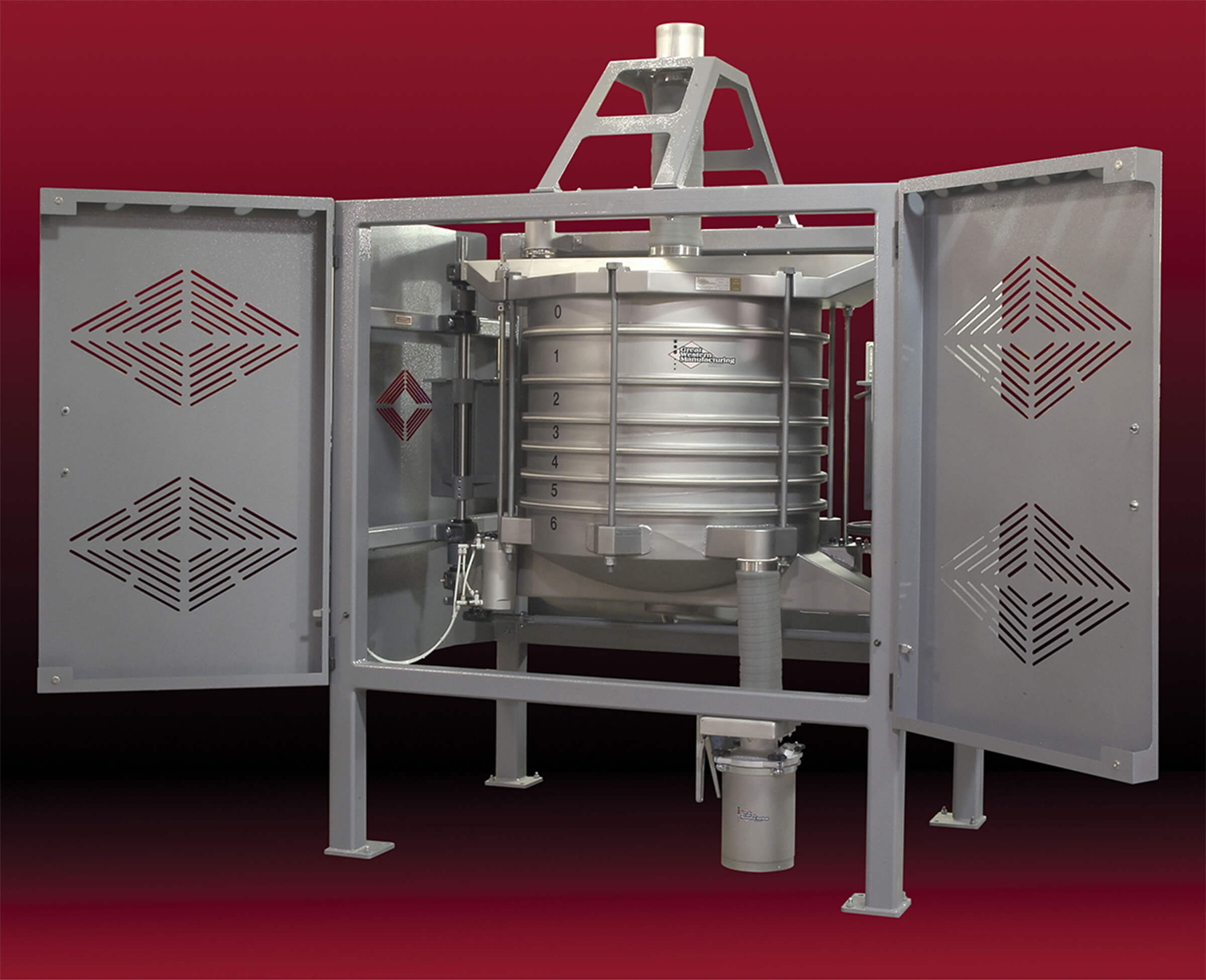
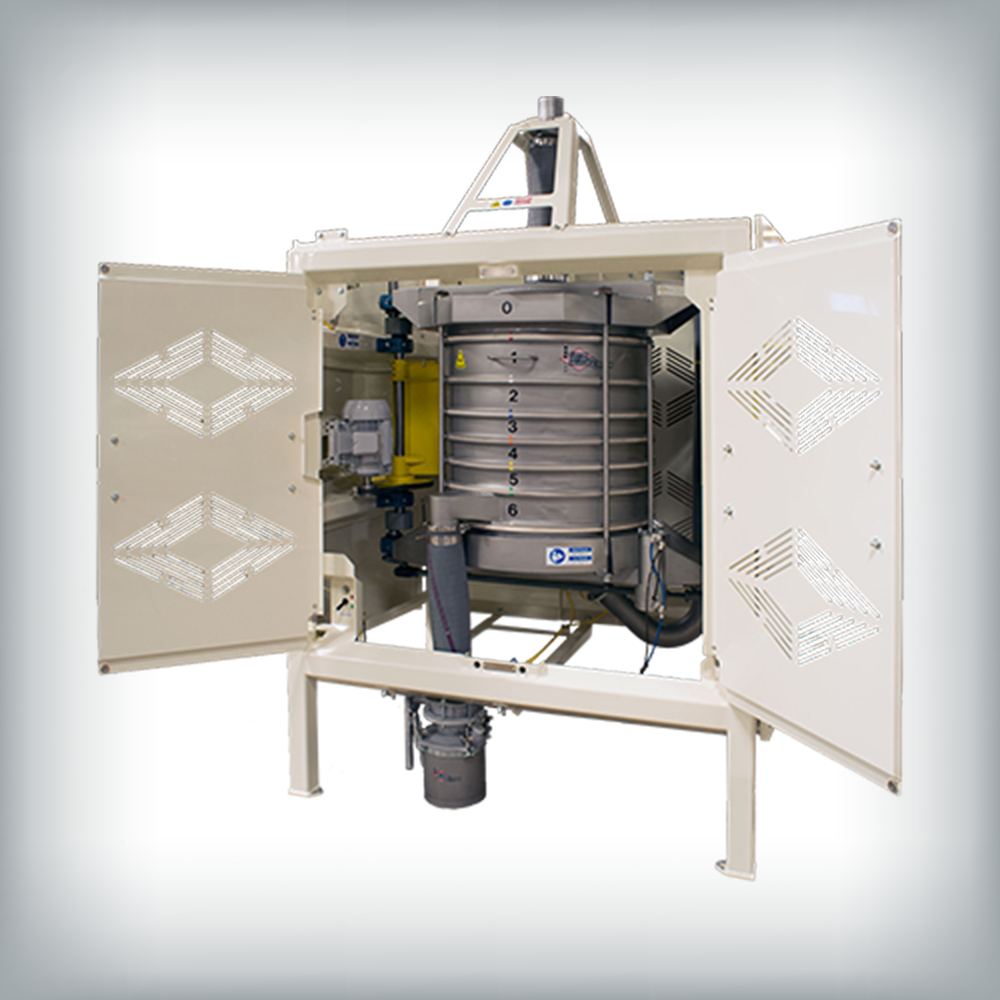
Though In-line sifting was not invented by Great Western, our In-Line sifters are unique. They are sifters engineered to work under pressure rather than a pressure vessel adapted to act like a sifter. Because Great Western put the priority in sifting, our In-Line sifters incorporate the features engineers, sanitarians, maintenance personnel, and operators have come to expect in any reliable gravity flow sifter.

The Great Western In-Line Tru-Balance Sifter allows direct insertion into a vacuum or pressure pneumatic conveying line and is intended as a quality assurance tool for removing a small number of oversized impurities from the product. Placed in pneumatic unloading or transfer systems, the In-Line Tru-Balance eliminates equipment such as cyclone receivers, airlocks, receiving hoppers, and blowers. All of which would be required if a standard (atmospheric pressure) sifter were utilized. All product contact surfaces are fabricated of stainless steel, which ensures compliance with the most stringent of sanitation standards.

The new Quality Assurance (QA) Series of In-Line sifters, the QA24, QA30, QA36, and QA46 replace the previous models 611 and 621.

  • Engineered to handle high-capacity quality assurance sifting applications gently and efficiently.
  • Ball or cube cleaners prevent blinding.
  • Stainless steel construction of all product contact areas.
  • Standard top vertical inlet and discharge simplifies installation.
  • Standard inlet and discharge support brackets eliminate custom fabrications.
  • Pneumatic sieve compression system with tie rods securely seals the nested sieve rings.
  • Nested sieve frames eliminate the need of a housing and enables the machine to be quickly and completely dismantled in minutes.
  • Individual sieve rings contain a lift-out tray frame which has mechanically stretched and glued-on clothing for the utmost in performance and sanitation.
  • Snap-on neoprene gaskets do not use adhesives for attachment.
  • Lift-out tray frames can be re-screened indefinitely.
  • Tailings canister with manual butterfly valve enable the tailings to be emptied even with the sifter in operation.
  • Reliable Tru-Balance drive straddles the sifter’s center of gravity and keeps the sifting motion in the machine.
 
  • Direct insertion into pressure or vacuum pneumatic conveying lines. This eliminates the need for receivers, airlocks, and additional blowers.
  • Equalized air pressure above and below the sifting screens. No differential air pressure is exerted on the product or sifting screen that would force material through the screens.
  • Gentle gyratory sifting. No unnatural physical or mechanical pressure to force product through the screens.
  • “Filtered” air to insure there is no possibility of oversized impurities by-passing the sifter.
  • Easy access for inspection or maintenance.

The In-Line sifter is, by far, preferred for bakeries, pasta plants, and mix plants. The primary reason for their choice is system simplification. This is clear when you examine the diagrams that are typical from silo to scale hopper:

A gravity flow sifter is not designed to accept air flow that will influence the sifting action. When properly applied, many systems require two blowers along with associated filter receivers, airlocks, surge hoppers, and dust control to enable the product to reach its destination. Compared to the In-Line sifter on the right which is designed to be inserted directly into pressure or vacuum dilute phase pneumatic conveying systems. Eliminating the need to go from one conveying state to another and back again saves a great deal of extraneous equipment. Not only are the initial system investment and installation costs substantially lower, the on-going operation, maintenance, and sanitation expenses over the life of the system are reduced. Another important benefit is that the In-Line concept gets the sifting protection as close to the finished product as possible with a minimum of additional costly equipment after the sifter that can be a source of contamination.


Usually constructed for floor mounting with a top inlet and top discharge, custom configurations for downward directed discharges and multiple floor layouts are easily accommodated. An important benefit of the reliable Tru-Balance drive is that no massive foundation is required.

Its compact, space saving design with light weight components enables the sifter to be easily dismantled for inspection, maintenance or cleaning. The sieve rings and screen trays nest together and are stacked one on top of the other on the lower dome. The number of sieves required is based on the product, conveying rate, and sieve mesh size for each application.

A pneumatic sieve compression system and draw rods compress the stack of sieves between the upper and lower domes to create an air-tight unit. The upper and lower domes are connected to the drive components which are supported on the two sides within a tubular frame.

The In-Line Tru-Balance Sifter uses standard motors and V-belts to turn the two counterweights positioned on the left and right sides of the machine. These weights straddle the machine’s center of gravity and counterbalance the mass of the rotating sifter housing. This unique drive mechanism, invented by Great Western, ensures a balanced operation and minimizes building structural demands. The shake stays in the sifter! Mechanically, there are no gear boxes that can leak, and no sifter knuckles to wear out.

 
  1. QA 24
    • Nominal Ø24” (Ø610 mm)
    • Net screen area 2 ft2/sieve (0.19 m2/sieve)
    • Models with two to five sieves (0.37 to 0.93 m2)
    • Net sieving area from 4 to 10 ft2 (0.37 to 0.93 m2)
    • One – 1 HP (0.75 kw) motor with V-belt drive
    • Drive guards
    • Up to Ø3” conveying lines
    • Inlet and discharge support brackets
    • Tailings container with manual butterfly valve
    • Rates to 350 lbs/min (160 kg/min) on hard wheat flour with 30 mesh screens
  2. QA 30
    • Nominal Ø30” (Ø762 mm)
    • Net screen area 3.7 ft2/sieve (0.34 m2/sieve)
    • Models with two to five sieves (0.69 to 1.72 m2)
    • One – 1 ½ HP (1.1 kw) motor with V-belt drive
    • Drive guards
    • Up to Ø4” conveying lines
    • Inlet and discharge support brackets
    • Tailings container with manual butterfly valve
    • Rates to 400 lbs/min (180 kg/min) on hard wheat flour with 30 mesh screens
  3. QA 36
    • Nominal Ø36” (Ø914 mm)
    • Net screen area 5 ft2/sieve (0.46 m2/sieve)
    • Models with two to seven sieves (0.69 to 1.72 m2)
    • One – 1 ½ HP (1.1 kw) motor with V-belt drive
    • Drive guards
    • Up to Ø6” conveying lines
    • Inlet and discharge support brackets
    • Tailings container with manual butterfly valve
    • Rates to 700 lbs/min (320 kg/min) on hard wheat flour with 30 mesh screens
  4. QA 46
  • Nominal Ø46” (Ø1168 mm)
  • Net screen area 8.9 ft2/sieve (0.83 m2/sieve)
  • Models with four to seven sieves (0.69 to 1.72 m2)
  • Net sieving area from 35.6 to 62.3 ft2 (3.31 to 545 m2)
  • Two – 1 ½ HP (1.1 kw) motor with V-belt drive
  • Drive guards
  • Up to Ø6” conveying lines
  • Inlet and discharge support brackets
  • Tailings container with manual butterfly valve
  • Rates to 1200 lbs/min (545 kg/min) on hard wheat flour with 30 mesh screens
 

Our pneumatic sieve compression and modular interlocking frame simplifies your sanitation and maintenance.

  • Sifter can be opened, sieves completely removed and maintained, and reassembled in minutes and without any specialized tools, minimizing downtime.
  • Pneumatic sieve clamping system allows fast disassembly. The sieves and screen trays simply interlock with one another.
  • Using pneumatics, the upper drive frame is raised to open the sifter or lowered to compress and seal the sieve stack. The pneumatics maintains constant compression while the machine is in operation.
  • Our drive and frame carriers are engineered to minimize gasket wear and eliminate leaks.
  • Stainless steel sieve and product contact zone construction allows cleaning to be accomplished with dry brushing, air cleaning, water wash down, or steam cleaning.
  • Dust tight gasketed construction. No suction requirements.
  • Sieves remove completely. Smooth crack and crevice free bottom dome with easy access to outlet transitions for thorough cleaning.
  • Upper and lower drive carriers remain attached to the drive mechanism.
 

Check Out Our Library For Product Brochures

Click Here To See Our Tru-Balance Drive Video